Clear Stickers vs White Vinyl Stickers: Which Should You Choose?

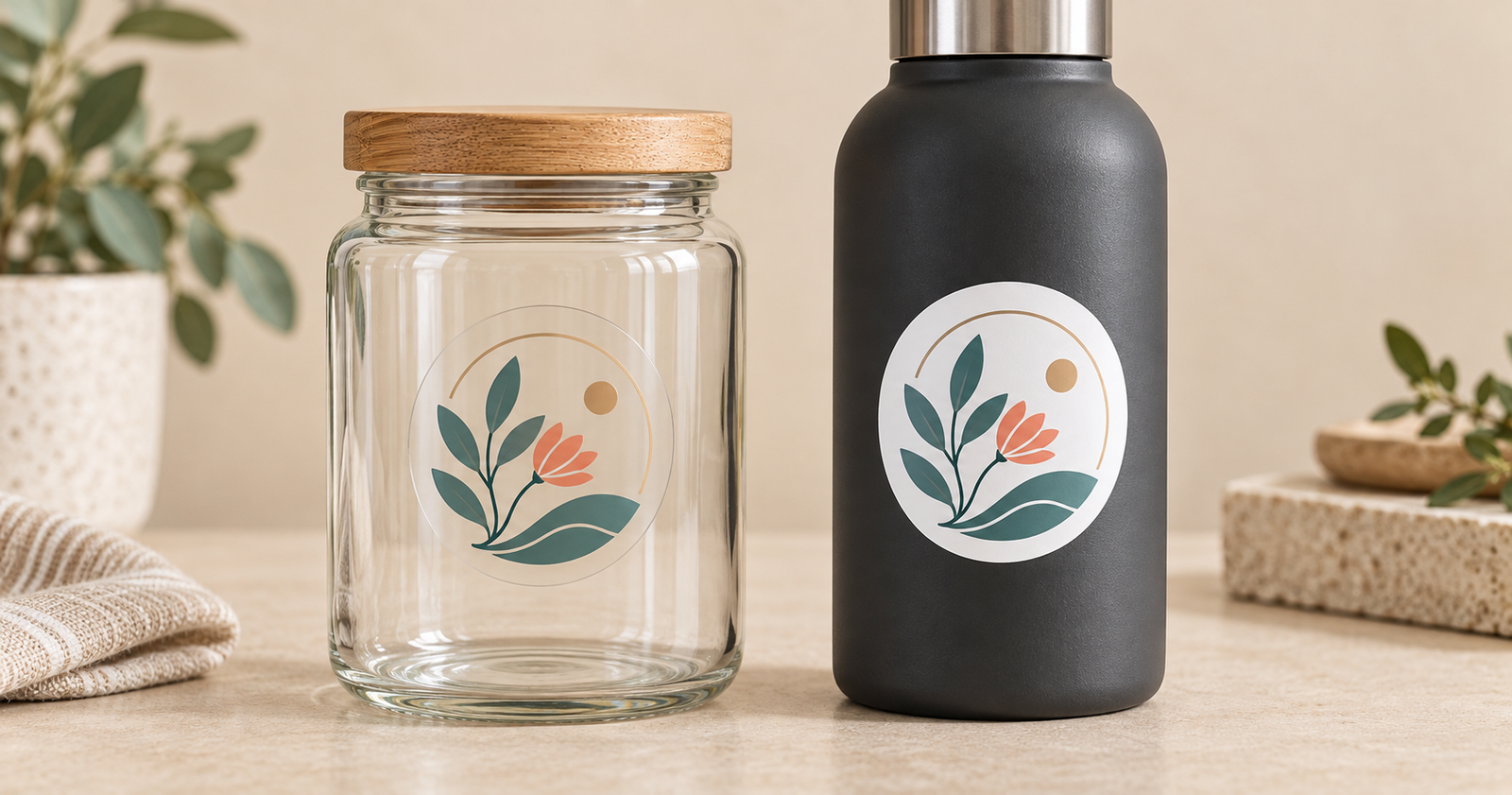
Choose clear stickers when you want the surface beneath the artwork to remain visible. Choose white vinyl stickers when you want predictable color, strong contrast and an opaque background across many different surfaces.
Neither material is universally better. Clear film makes the container or surface part of the design. White vinyl gives the artwork its own white foundation. That one difference affects color, readability, proofing and the finished style.
Key Takeaways
- Clear stickers suit glass, windows and packaging where a no-label look matters.
- White vinyl is the safer choice when surface color varies or artwork contains pale colors, photographs or fine text.
- White ink can improve opacity on clear material, but it does not turn the whole clear sticker into white vinyl.
- Test the actual application surface before placing a large or color-critical order.
Clear and White Vinyl Stickers at a Glance
| Decision point | Clear stickers | White vinyl stickers |
|---|---|---|
| Base | Transparent | Opaque white |
| Surface influence | High | Low |
| Color consistency across surfaces | More variable | More predictable |
| White artwork | Requires white ink | Uses the white material base |
| Best visual effect | Minimal, integrated, no-label look | Bold, traditional, high-contrast sticker |
| Strong starting surfaces | Glass, clear plastic, smooth light packaging | Most compatible smooth surfaces, including dark colors |
| Artwork sensitivity | Requires careful contrast and white-ink decisions | More forgiving for general artwork |
This comparison concerns visual behavior and artwork planning. Confirm exact adhesive, finish, outdoor suitability and cleaning resistance for the specific product before ordering.
What Are Clear Stickers?
Clear stickers use a transparent face material, so unprinted areas reveal the application surface. On glass or clear packaging, the design can appear to be printed directly on the object instead of sitting inside a visible white rectangle.
That effect comes with a tradeoff: color is influenced by the background. Light colors can lose contrast, and white artwork requires a white-ink setup. Clear material also makes trapped dust, fingerprints and bubbles easier to notice during application.
Clear stickers are a strong choice for:
- Glass jars and bottles
- Windows and transparent panels
- Cosmetic and candle packaging
- Minimalist logos
- Designs with intentional transparent space
Explore the available custom clear sticker options before preparing your final artwork.
What Are White Vinyl Stickers?
White vinyl stickers use an opaque white face material. The white base separates the printed artwork from the color beneath it, helping the design look more consistent across different surfaces.
White vinyl is normally easier for photographs, detailed illustrations, QR codes, pale colors and small text because the background does not compete with the artwork. It also makes sense for giveaways or general-purpose stickers when you cannot predict where customers will apply them.
White vinyl is a strong choice for:
- Brand and logo stickers
- Laptops, cases and equipment
- Dark or colorful packaging
- Full-color illustrations
- Designs that rely on a white background
- Stickers distributed without a predetermined application surface
How Does the Base Affect Printed Color?
The white base of an opaque sticker behaves like the white paper behind a normal print: it provides a consistent foundation. A clear sticker lacks that built-in foundation, so the real-world surface participates in the color result.
For example, the same pale blue artwork may look clean on a white bottle, more muted on clear glass, and difficult to read on a dark container. A white underbase can support selected areas on clear film, but any areas left transparent will still respond to the surface below.
For a focused explanation of underprinting, see our guide to clear stickers with white ink vs without white ink.
Which Material Is Better for Your Surface?
Glass and clear plastic
Clear stickers preserve visibility and can create a refined no-label appearance. White vinyl makes the label area intentionally opaque and can improve readability when the product or background is visually busy.
Dark surfaces
White vinyl is the straightforward choice because it supplies its own bright base. Clear stickers can work when a suitable white underbase is added, but that setup must be confirmed in the proof.
Kraft paper, wood or textured backgrounds
An opaque material usually gives more predictable color and contrast. Adhesion on textured or porous surfaces depends on the specific adhesive and surface condition, so request a sample when possible.
Windows
Clear film suits designs that should blend into the glass. Confirm whether the sticker will be applied outside the window or viewed through the glass from the opposite side; viewing direction can change the required print order.
Which Material Is Better for Your Artwork?
Choose clear stickers when:
- Transparent areas are part of the concept
- The surface itself should remain visible
- The artwork is simple and high-contrast
- You can specify the intended surface before printing
Choose white vinyl stickers when:
- Colors need to remain consistent across different backgrounds
- The design contains light colors, detailed illustrations or photographs
- Small text or codes must stay easy to read
- You do not know where the sticker will be applied
Clear Stickers vs White Vinyl for Product Packaging
For packaging, the decision should begin with the brand effect rather than the material name.
Clear labels can make glass bottles, jars and cosmetic containers look less covered. They are useful when the customer should see the product or container color through the label. White vinyl creates a defined branding panel and offers more reliable contrast for ingredients, instructions and other important information.
If the design combines decorative branding with essential small text, consider whether a clear front label and an opaque information label would communicate better than forcing one material to do both jobs.
If the sticker will face rain, sunlight, temperature changes, or repeated outdoor handling, use our outdoor sticker material guide before choosing the final construction.
A Simple Decision Checklist
- Should the product or surface remain visible through the sticker?
- Is the application surface light, dark, clear, metallic or textured?
- Does the artwork contain white or pale elements?
- Must the same design work on several surface colors?
- Is small text or code readability essential?
- Will the sticker be viewed through glass?
- Do you need transparent and opaque areas in the same design?
If transparency is essential, start with clear material and plan the white ink carefully. If dependable color is more important, start with an opaque white material.
For a broader comparison, use our custom sticker material guide.
Common Questions
Are clear stickers the same as white vinyl stickers?
No. Clear stickers have a transparent base, while white vinyl stickers have an opaque white base. Both may be film-based products, but they create different visual results.
Can white ink make a clear sticker look like white vinyl?
A full white underbase can make printed areas more opaque, but transparent zones, edges and the overall construction remain different. If the whole design needs a consistent white foundation, white vinyl is usually simpler.
Which is better for dark bottles?
White vinyl is usually easier because it naturally provides contrast. Clear material can work with a properly planned white underbase.
Which is better for glass jars?
Clear stickers are useful when you want the jar or product to remain visible. White vinyl is better when the label needs a defined background or contains small essential text.
Choose the Material That Fits the Finished Look
Clear stickers integrate the design with the surface. White vinyl separates the design from it. Once you know which effect you want, the material decision becomes much easier.
Not sure which product fits? Browse all custom sticker options.
