Are Clear Stickers Waterproof? What Water Resistance Really Means

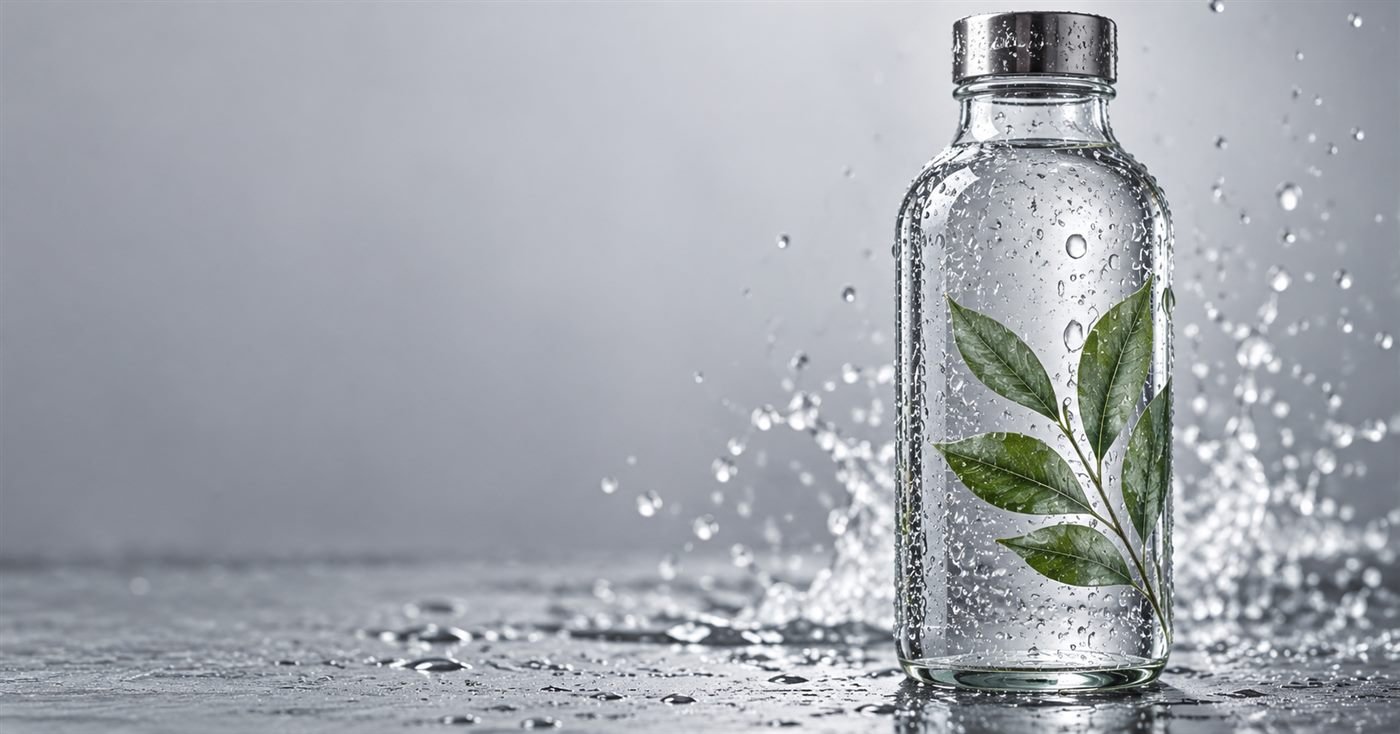
Clear stickers can resist occasional water exposure when the printed film, ink, laminate and adhesive are all suitable for the intended use. That does not automatically make every clear sticker safe for soaking, dishwashers, pressure washing or long-term outdoor exposure.
For a useful answer, separate three questions: can water reach the printed image, can moisture weaken the adhesive, and will cleaning or abrasion damage the surface? The application surface and installation method matter just as much as the face material.
Key Takeaways
- A film-based clear sticker is generally more moisture tolerant than an unprotected paper sticker, but the exact product specification controls the result.
- Lamination can protect the printed face from moisture, scuffs and handling, but it cannot correct poor adhesion or an unsuitable surface.
- Apply stickers to a clean, dry, smooth surface and allow the adhesive to build its bond before heavy water exposure.
- "Water-resistant" should not be interpreted as dishwasher-safe, submersible or permanent unless the product has been tested and specified for that use.
Waterproof and Water-Resistant Are Not the Same Claim
Water resistance describes performance under defined conditions. A sticker may handle splashes or wiping but fail during soaking, hot washing, chemical cleaning or repeated abrasion. The word "waterproof" is often used broadly in product marketing, so buyers should look for the actual construction and intended application instead of relying on the label alone.
For clear stickers, water can affect several parts of the construction:
- The transparent face film
- The printed ink layer
- Any protective laminate
- The pressure-sensitive adhesive
- The bond between the adhesive and the application surface
If one layer is unsuitable, the finished sticker may fade, lift at the edges, trap moisture or detach even when the film itself does not absorb water.
What Makes a Clear Sticker Resist Water?
A film face material
Synthetic films do not behave like untreated paper when wet. The face material is only one part of the system, however. Confirm the specific film, adhesive and finish offered for the product you plan to order.
Compatible printing and finishing
Printed graphics need a production process intended for the face material and use. A protective laminate adds a physical layer over the printed surface and can reduce direct contact with moisture and abrasion. It does not seal every exposed edge or guarantee performance during immersion.
The correct adhesive
Pressure-sensitive adhesives are selected for particular surfaces and environments. Even a smooth bottle can be difficult to label when condensation or water prevents full adhesive contact. Avery Dennison’s label guidance notes that pressure-sensitive labels do not stick to water or condensation, which is one reason a sample test matters for bottles, windows and other frequently wet applications.
Proper installation
Dust, oil, cleaner residue and trapped moisture reduce the contact between the adhesive and the surface. 3M’s building-window application guidance calls for a clean, completely dry surface and warns that contaminants prevent the adhesive from performing as expected.
Does Lamination Make Clear Stickers Waterproof?
Lamination improves protection on the printed face, especially against splashes, rubbing and routine handling. It should be treated as one part of the construction, not as a universal waterproof guarantee.
The laminate does not solve these problems:
- Application over grease, dust or cleaner residue
- Water entering beneath a lifted or poorly bonded edge
- An adhesive that is not intended for the surface or environment
- Repeated exposure to high heat, strong chemicals or mechanical scrubbing
- A container or surface that flexes, sweats or changes temperature sharply
If the sticker will be cleaned frequently, placed outdoors or exposed to condensation, describe those conditions before ordering. A printer can then confirm whether the available material and laminate match the use.
How Different Water Exposures Affect Clear Stickers
| Exposure | Practical expectation | What to verify |
|---|---|---|
| Light splashes | Often suitable for a correctly produced and applied film sticker | Face material, ink and laminate |
| Damp wiping | Usually less demanding than soaking | Cleaner compatibility and edge condition |
| Refrigeration and condensation | Moisture can collect repeatedly around edges | Adhesive, surface preparation and dwell time |
| Outdoor rain | Requires the whole construction to suit exterior use | UV, temperature, ink, laminate and adhesive specifications |
| Short soaking | More demanding than splashes | Whether the product is specified for immersion |
| Dishwasher cycles | Heat, detergent, water pressure and abrasion act together | Use only if explicitly tested and described as dishwasher-safe |
| Shower or bathroom use | Humidity and recurring moisture can challenge edges and adhesion | Surface, ventilation, cleaner and adhesive suitability |
Avoid making a purchase decision from the word "vinyl" alone. Review our clear stickers vs white vinyl stickers comparison to understand how the transparent base changes appearance, then confirm the separate durability requirements for your application. For bottles and windows, continue with our clear stickers for glass guide.
How to Apply Clear Stickers for Better Moisture Resistance
1. Choose a smooth, compatible surface
Glass, smooth plastic and coated metal are usually easier starting points than porous, powdery or heavily textured surfaces. Test unfamiliar plastics and coatings because surface treatments can change adhesion.
2. Remove contamination
Follow the material supplier’s cleaning instructions. Avoid assuming that a household glass cleaner is suitable: some products can leave residues. For professional window films, both 3M and Avery Dennison emphasize clean, dry glass and lint-free wiping.
3. Let the surface dry completely
Do not trap cleaning solution or condensation beneath the sticker. Apply in a clean environment and keep fingers away from the adhesive where possible.
4. Press the full sticker firmly
Work from the center outward with overlapping strokes. Pay special attention to the perimeter because loose edges provide a route for water and dirt.
5. Delay heavy exposure
Pressure-sensitive adhesives commonly build bond after application. Follow the supplier’s stated dwell time before washing, soaking or exposing the sticker to demanding conditions.
When Should You Request a Sample Test?
Request a sample when the result affects safety, compliance, costly packaging or a large production run. A realistic test should use the actual bottle, jar, window or product surface and the same cleaning routine expected in service.
Test for:
- Edge lifting after repeated wet and dry cycles
- Changes in color or clarity
- Scratching during normal cleaning
- Adhesive residue or difficult removal
- Condensation beneath or around the sticker
- Readability on the real background
Do not treat an informal sample as proof of every possible condition. It is a practical way to identify obvious incompatibility before scaling the order.
Common Questions
Can clear stickers go on water bottles?
They can be suitable for bottles when the product construction and adhesive match the use. Hand washing, condensation and dishwasher cycles are different exposure conditions, so confirm the most demanding one before ordering.
Are laminated clear stickers dishwasher-safe?
Not automatically. Lamination protects the printed face, but a dishwasher adds heat, detergent, water pressure and abrasion. Only describe a sticker as dishwasher-safe when the exact product has been tested and specified for those cycles.
Can clear stickers be used outdoors?
Some clear film constructions are designed for outdoor graphics, while others are not. Exterior suitability depends on the film, ink, laminate, adhesive, application surface, temperature and sunlight exposure.
Why do sticker edges lift after getting wet?
Common causes include surface contamination, trapped moisture, insufficient pressure, premature washing, an incompatible adhesive or a curved area that places stress on the edges.
Choose Clear Stickers for the Real Environment
Start with the actual exposure: splash, condensation, cleaning, rain, soaking or dishwasher cycles. Then select the material, finish and adhesive that match that condition rather than relying on a single "waterproof" label.
Choose Clear Stickers for Your Application
Choose your size and shape, upload your artwork, and confirm the surface and moisture exposure before production.
For other constructions, browse all custom sticker options, use our custom sticker material guide, or explore the Clear Sticker Guides collection.
